
Pipe mold powder is an important additive for the production of ductile iron pipes. It can protect the pipe mold, facilitate demolding, effectively reduce the degree of supercooling, inhibit the formation of carbides, inoculate, eliminate the pores and pinholes on the outer surface of the casting pipe, and spheroidization. It is the last key material in the ductile iron pipe forming process, with high technical content and great difficulty in production. The quality of the tube mold powder will directly affect the quality, qualification rate and production efficiency of the product.
Most of the existing technologies use a cold working process of directly mixing and compounding powders after several raw materials are mechanically crushed to make tube mold powder. The performance is unstable, the spheroidization rate is low, the number of graphite balls is small, and the pinhole rate is high. Especially in the production of small-diameter ductile iron pipes, the casting defects of ductile iron pipes are significantly increased due to the substantial reduction in the amount of molten iron.
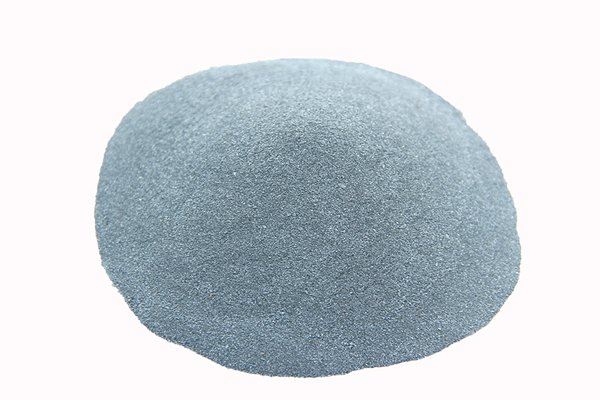
The use of pipe mold powder: When producing ductile iron pipes, it will contain a certain amount of carbon, which will be closely combined with iron, and the form of carbon in solidified cast iron is very important for the performance of cast iron pipes. If this carbon is in the form of iron carbide, the cast iron is called white iron, which is hard and brittle and has poor practicality. If the carbon is in the graphite state, the cast iron is soft and easy to work, it is called gray cast iron, and it is very practical. The graphite state can be further divided into flake, dense and spherical, with the spherical form showing the highest strength and the most ductile form of cast iron. Therefore, in the process of solidification of cast iron, the auxiliary effect of additives is needed to make the ductile iron pipe achieve the desired effect. Usually, the quality of the additive is measured by the spheroidization rate, the number of graphite nodules and the pinhole rate of the ductile iron pipe.
Most of the existing technologies use a cold working process of directly mixing and compounding powders after several raw materials are mechanically crushed to make tube mold powder. The performance is unstable, the spheroidization rate is low, the number of graphite balls is small, and the pinhole rate is high. Especially in the production of small-diameter ductile iron pipes, the casting defects of ductile iron pipes are significantly increased due to the substantial reduction in the amount of molten iron.
The use of pipe mold powder: When producing ductile iron pipes, it will contain a certain amount of carbon, which will be closely combined with iron, and the form of carbon in solidified cast iron is very important for the performance of cast iron pipes. If this carbon is in the form of iron carbide, the cast iron is called white iron, which is hard and brittle and has poor practicality. If the carbon is in the graphite state, the cast iron is soft and easy to work, it is called gray cast iron, and it is very practical. The graphite state can be further divided into flake, dense and spherical, with the spherical form showing the highest strength and the most ductile form of cast iron. Therefore, in the process of solidification of cast iron, the auxiliary effect of additives is needed to make the ductile iron pipe achieve the desired effect. Usually, the quality of the additive is measured by the spheroidization rate, the number of graphite nodules and the pinhole rate of the ductile iron pipe.
Contact Us Today!
We welcome inquiries in English, Español (Spanish), Русский язык (Russian), Français (French), and العربية (Arabic).
Our professional team will reply to you within one business day. Please feel FREE to contact us!
Your privacy is important to us,we are committed to marking sure your privacy is
confidential.