
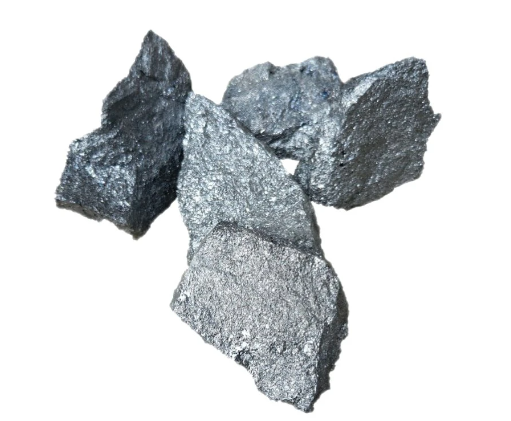
High Carbon Silicon, often referred to as high-carbon ferrosilicon, is an innovative alloy with a range of industrial applications. Combining silicon and carbon, this alloy is primarily used in the steelmaking and foundry industries. Understanding its properties, production process, and applications provides insight into its significance in modern manufacturing.
Composition and Properties
High Carbon Silicon is composed of silicon (Si) and carbon (C) in varying ratios, typically containing 60-70% silicon and 10-20% carbon. The balance includes other elements such as iron and trace amounts of other metals. This combination gives high carbon silicon several key properties:
- High Thermal Conductivity: The presence of silicon imparts excellent thermal conductivity, making it ideal for applications requiring efficient heat transfer.
- Hardness and Strength: The alloy's hardness and strength are significantly enhanced due to the carbon content, improving the mechanical properties of the final products.
- Reducing Agent: Silicon acts as a reducing agent in various metallurgical processes, particularly in the production of steel and cast iron.
- Deoxidizing Agent: High Carbon Silicon is effective in removing oxygen from molten metals, thus improving the quality and purity of the final product.
Production Process
The production of high carbon silicon involves several stages:
Raw Material Selection: The primary materials used are silica (SiO2) and carbon sources such as coke or coal.
Smelting: The raw materials are smelted in an electric arc furnace at high temperatures (around 2000°C). During this process, silicon dioxide is reduced by carbon to produce silicon and carbon monoxide.
Alloying: The molten silicon is then alloyed with additional carbon and sometimes iron to achieve the desired composition.
Casting and Cooling: The molten alloy is cast into molds and allowed to cool and solidify.
Crushing and Screening: The solidified alloy is crushed and screened to produce the required size fractions for different applications.
| High carbon silicon | Chemical composition(%) | Size(mm) | ||||
|---|---|---|---|---|---|---|
| Si | C | Al | S | P | ||
| ≥ | ≥ | ≤ | ≤ | ≤ | ||
| Si68C18 | 68 | 18 | 3 | 0.1 | 0.05 | 5-25 |
| Si65C15 | 65 | 15 | 3 | 0.1 | 0.05 | 10-50 |
| Si60C10 | 60 | 10 | 3 | 0.1 | 0.05 | 10-100 |
Applications
High Carbon Silicon is utilized in various industrial processes, particularly in the steelmaking and foundry sectors:
- Steelmaking: In steel production, high carbon silicon serves as a deoxidizer and alloying agent. It helps remove oxygen from molten steel, preventing defects and improving the steel's mechanical properties.
- Foundry Industry: High carbon silicon is used in the production of cast iron. It acts as an inoculant, enhancing the quality of the cast iron by refining its microstructure and improving its mechanical properties.
- Alloy Production: It is also used in the production of other silicon-based alloys, such as ferrosilicon, which are essential in various metallurgical applications.
- Chemical Industry: The high silicon content makes it valuable in the chemical industry for the synthesis of various silicon compounds.
Advantages and Environmental Impact
High Carbon Silicon offers several advantages in industrial applications:
- Cost-Effective: It is a cost-effective alternative to pure silicon and carbon sources, providing the same benefits at a lower price.
- Improved Efficiency: Its use improves the efficiency of metallurgical processes, reducing energy consumption and production costs.
- Environmental Benefits: By enhancing the quality of steel and cast iron, high carbon silicon contributes to longer-lasting and more durable products, indirectly benefiting the environment by reducing the need for frequent replacements.
However, it is important to consider the environmental impact of its production. The smelting process consumes significant energy and releases carbon monoxide, a greenhouse gas. Advances in production technology and the use of renewable energy sources can mitigate these impacts.
High Carbon Silicon is a versatile alloy that plays a crucial role in modern manufacturing, particularly in the steelmaking and foundry industries. Its unique properties, cost-effectiveness, and efficiency make it an essential material in metallurgical processes. As technology advances, the production and application of high carbon silicon are likely to evolve, further enhancing its benefits and minimizing its environmental impact.